Smiley Funnyboo: The Cozy Handwritten Font for Makers
It was a quiet Tuesday morning in my craft studio, the kind where the only sound is the hum of the cutting machine and the soft scratch of my pencil on paper. I was stuck on a new line of soy candles, specifically the packaging labels. I had the wax scents perfect—lavender and vanilla bean—but the typography felt flat. My usual go-to script looked too formal, and the bold sans serif options felt too industrial for the cozy vibe I wanted to create. That’s when I stumbled upon Smiley Funnyboo. As soon as I opened the font file, I knew this was the missing piece. It wasn’t just another typeface; it felt like a warm hug in digital form.
Bringing Joy to Your Product Labels
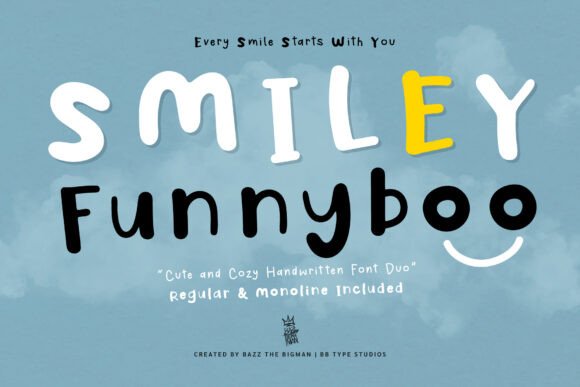
The moment you load Smiley Funnyboo into your design software, its personality shines through. This isn't a rigid, mechanical font. It is a true handwritten duo that captures the spontaneity of pen on paper while maintaining enough structure to be legible. What sets it apart immediately are those soft, rounded terminals and the iconic smiley face integrated into the letterforms. It feels playful yet polished, exactly what you need when you want your handmade goods to feel approachable and friendly.
I decided to test it right away on a batch of candle labels. I used the Regular chunky version for the main product name, "Midnight Vanilla." The weight of the letters held up beautifully against the cream-colored sticker paper. Because the font has such a robust presence, it didn't get lost when printed at a small size. Then, for the scent description below, I switched to the Monoline version. The contrast between the thick, juicy strokes of the chunky style and the delicate, consistent lines of the monoline created a visual hierarchy that guided the customer's eye perfectly. It transformed a simple label into a piece of art.
Designing with Personality and Purpose
As a maker, I’ve learned that your brand identity is often communicated most quickly through your typography. Smiley Funnyboo does heavy lifting here. When customers see your shop tags, greeting cards, or packaging, they aren't just reading words; they are feeling an emotion. The inherent joy in this font makes products feel more special. Whether you are designing boutique tags for a clothing line or creating custom stickers for planners, this font adds a layer of warmth that generic typefaces simply cannot match.
I recently worked on a set of birthday invitations using this font. The theme was "Happy Days," and Smiley Funnyboo fit the brief perfectly. I used it for the headline, and the little smiles hidden within the letters added a whimsical touch that made the invitation feel personal, as if it were written by hand just for the recipient. For the body text, which included the date, time, and location, I paired it with a clean, simple sans serif font. This combination ensured that the decorative nature of the display font didn't compromise readability. The result was an invitation that felt festive and fun but remained clear and easy to read.
Practical Tips for Cutting Machines and Printables
If you are a Cricut or Silhouette user like me, you know that not all fonts cut cleanly. Thin scripts can sometimes break during the weeding process, leaving behind tiny pieces of vinyl that ruin the finish. One of the reasons I love Smiley Funnyboo is its structural integrity. The chunky version, in particular, is designed with cutting machines in mind. The curves are smooth, and the connections between strokes are strong, meaning less frustration when weeding intricate designs for t-shirts or tote bags.
However, readability is still key. While the font is stunning for headlines and short phrases, I recommend being mindful when using it for longer blocks of text. It is best suited for titles, names, quotes, and decorative wording. If you need to print a long paragraph of instructions or a detailed product description, pairing it with a highly readable serif or sans serif font is the professional choice. This keeps your design assets looking cohesive without overwhelming the viewer.
Creating Cohesive Branding Across Products
Consistency is the secret sauce of any successful handmade business. Using a premium font like Smiley Funnyboo across all your materials helps build instant recognition. Imagine a customer walking past your booth at a craft fair. They see a sign with the font, then a tag on a mug, and finally a sticker on a notebook. Even if they don't stop to read every word, the familiar shape of the letters signals that these items belong to the same creator. This visual consistency builds trust and makes your brand memorable.
I have started incorporating this font into my social media graphics as well. When I post photos of my latest creations, the overlay text uses Smiley Funnyboo to match the physical products. It creates a seamless experience from the digital feed to the physical item. Whether it is a seasonal holiday card, a wedding welcome board, or a printable wall art download, the font adapts effortlessly to different contexts while maintaining its core charm.
Technical Details and Commercial Licensing
Before diving deep into production, it is always wise to check the technical specifications of your design assets. Smiley Funnyboo comes as a versatile duo, offering both Regular chunky and Monoline versions. This variety gives you flexibility without needing to purchase multiple licenses. The font includes standard OpenType features, ensuring that you have access to alternates and ligatures that can add even more character to your logo design or editorial projects.
For those selling physical products, templates, or digital downloads, understanding the commercial font licensing is crucial. Always verify that your license allows for the specific use case you have in mind. Most modern commercial fonts allow for use on merchandise like mugs, shirts, and tote bags, as well as in digital printables and SVG-style designs. However, rules can vary, so it is essential to review the End User License Agreement (EULA) provided with the font files. Ensuring you have the right permissions protects your business and lets you focus on what you do best: creating beautiful things.
In my workflow, I also appreciate the multilingual support often found in high-quality typefaces from creators like Script Amp. If your customer base is global, having a font that supports various character sets ensures you can include messages in different languages without breaking the design flow. This attention to detail in the font's construction speaks volumes about the quality of the asset.
Pairing for Perfect Harmony
Typography is rarely a solo act. To make Smiley Funnyboo truly sing, I find that pairing it with contrasting styles yields the best results. A clean, geometric sans serif works wonders to ground the playfulness of the handwritten script. Alternatively, a classic serif font can add a touch of elegance, making it suitable for wedding stationery or upscale boutique packaging. The key is balance. Let Smiley Funnyboo take the spotlight for the emotional, expressive parts of your design, and let a neutral font handle the informational details.
Whether you are crafting a one-of-a-kind gift or launching a full product line, the right font can elevate your work from good to unforgettable. Smiley Funnyboo has become a staple in my creative toolkit because it brings genuine joy to every project. It reminds me that design is not just about aesthetics; it is about connection. And when you hand over a package with a label that smiles back at the customer, you know you’ve created something truly special.